Franti, Out!

On Stamm

CR_FrantiOut_

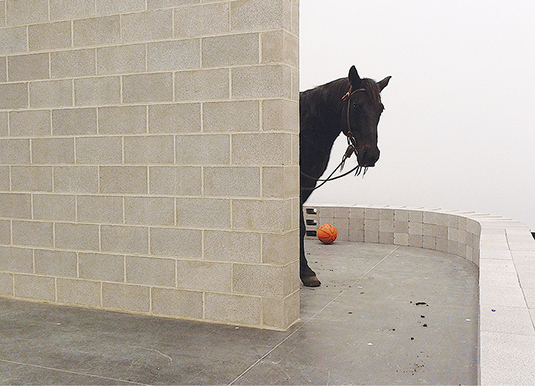
Diego Marcon, Untitled (Head falling 02&05), 2015. Courtesy the artist.

Careof is a not-for-profit space in Milan hosted in a public architectural complex called La Fabbrica del Vapore (The Steam Factory) which, at the beginning of the 1900s, was where trams were built. The site is next to the calm beauty of Cimitero Monumentale, a tidy layout of trees and tombs of various styles and sizes. On the opposite side is the lively Chinatown, always buzzing with people, plenty of shops and more recently trendy bars serving bubble tea.

Caterina Riva, 2015

Read full text on Stamm

Parks and Roubles

On Stamm

CR_ParksAndRoubles_

It’s my first day in Moscow and I need to get roubles. The hotel I am staying at instructs me on how to find a bank. The lobby is spacious and shiny and I am not sure which facility I have entered. I ask someone if I can exchange currency and they take me to another room with two women behind a desk, who introduce me to a third door. After passing through a small waiting room with a sofa, a sliding door with a button brings  me to a window counter. Two men in front of me take twenty minutes to finish: they carry suitcases and the counting machines are in constant motion. Two flat screens show me boats, luxury locations and offshore banking ads.

Caterina Riva, 2015

Read full text on Stamm

HEART, FILM AND EXHAUSTION [EN-IT]

On Nero

CR_DiegoMarcon1

Diego Marcon, SPOOL BROADCASTING, block III, Tape 02. Elena, July 15 2012. Courtesy the artist

Milan, EXT. DAY.

A loud noise comes from inside the exhibition space. Once through the darkened threshold, a giant garden dwarf welcomes the visitor to Diego Marcon’s suggestive new body of works. The artist, on returning to Milan after over a year in Paris and after several months of tight work, faces up to what has been happening around him and analyses his own artistic drives, choosing to approach his beloved medium of film in an artisanal way. The conversation delves into Marcon’s older projects and how they are feeding this exhibition as well as driving the development of new characters for the future. Spoilers ahead: the interview contains mentions of Heads, Winnie-The-Pooh and what Franti stands for.

Caterina Riva, 2015

Read full text on Nero

Full conversation in Italian here

Beached

On Stamm

CR-2-

There is an Inside Amy Schumer sketch that I have been watching over and over: a woman bumps into a friend on a New York sidewalk, and compliments her on her looks, but in the ensuing moments the friend subverts the quality that was praised by firing off a list of negative aspects she sees in herself. New female acquaintances pass by and join in the routine of annulling the compliment just paid by describing all the freakish faults in their own appearance. The dynamic is broken to disastrous effect when someone accepts the praise at face value.

Caterina Riva, 2015

Read full text on Stamm

We swim in unknown unknowns

On Stamm

CR_Swimming

Performance Proletarians, rehearsal, Istituto Svizzero di Roma, 2015

We have entered a period of barbarism, she says. (S. Sontag)

Did I tell you I have been in living in Rome since the beginning of the year? Rome is beautiful but full of tourists, and shits. I mean real dog poo on the pavement. It’s really dirty, as my parents kept saying when they came to visit. They live in the North of the Country, you see, close to Switzerland.

Caterina Riva, 2015

Read full text on Stamm

Blindspots

On #500

CR_IteUhila

Janet Lilo, photos of ‘Ite around the AAG, 2014. Courtesy the photographer

I have returned from Biel/Bienne, a small town caught between lakes and hills in the part of Switzerland that from French speaking becomes German, hence the double languages in the signage. I never thought using two languages could have been so confusing, when trying to order at the bakery I think I managed to use four languages in one sentence. I was there to follow the time based performances constituting the 2014 Swiss Sculpture Exhibition. Bodies rather than objects, interacting or reacting to the city, its public constituted by amused, confused or blind passerbys and art professionals, prepared to witness anything and following a strict time schedule.

Caterina Riva, 2014

Read full text on #500words


Contra La Pasividad [ES-EN]

CR_LaPasividad

Luciana Achugar, The Pleasure Project, 2014. Courtesy Le Mouvement, Biel/Bienne

English

Un gentío sigue a una mujer exuberante que usa un enorme sombrero, gafas oscuras y un vestido floreado, mientras camina por una rambla en Barcelona. La veo en un video en blanco y negro de 1973. Los niños, los hombres y las mujeres están desconcertados por las provocaciones de Ocaña, mientras descaradamente se levanta la falda para mostrar los genitales. Es la última semana de agosto y estoy en Biena, un pueblo tranquilo de Suiza donde se habla alemán y francés, ubicado a las orillas de un lago. Estoy aquí por Le Mouvement 2014, un festival que se celebra cada lustro, con obras públicas realmente propositivas. Los curadores de este año, Gianni Jetzer y Chris Sharp, han dedicado los seis días a performances que se extienden por el tiempo y el espacio del pueblo. El cuerpo es el material.

Continue reading

Killing Pots

On Seismopolite

CR_JorgeSatorre1

In 2012 two friends, artist Jorge Satorre and curator Catalina Lozano, went to the municipality of Valle de Chalco Solidaridad, Mexico State, a sprawling area south west of Mexico City DF where they both live. The area is known for its soil stratified with objects belonging to the cultures that populated the valley at different times. On their recurring visits Satorre and Lozano struck a friendship with Genaro Amaro Altamirano, the founder of the Community Museum of the Xico Valley (Museo Comunitario del Valle de Xico).

Caterina Riva, 2014

Read full text on Seismopolite

The Inhospitable World

With sprawling words by Adam Avikainen
________________________________________________________________
CR_AdamAvikainenen2

Adam Avikainen, Virus Made, 2014. drawing

I have known Adam for a decade: to date, we have crossed paths in Como, Amsterdam, Milan, Rome, London, Auckland, Taipei, Shenzhen, and Berlin; worked on a few projects together; and exchanged too many e-mails to count. Over the years, Adam has developed the habit of writing two, maybe three letters a day, some days none, some others, more than three. The e-mails appear inconsequential, operating as a stream of consciousness generally not requiring a personal reply, yet they are the artist’s dispatch to say that he is alive and located somewhere around the globe. The missives, usually sent to me in copy with a group of other undisclosed recipients, are addressed to names such as jesus.christ, obama, edward.snowden, jeffrey.koons, buddha@buddha.buddha, allah@mecca.com—which I suspect means that Adam Avikainen’s name features on a series of blacklists ranging from the National Security Agency (NSA) to the editors of Frieze magazine. It makes me wonder how much spam, how many mail-server errors, or returned messages, Adam receives on his account, especially when he makes up the names for domains or tries to reach people that have migrated elsewhere, both on the Web and in real life.

Continue reading

My lakes, my mountains

CR_ShannonTeAo

Shannon Te Ao, Untitled (after Rakaihautu), 2012. single channel video, color, sound, 3 min 26 sec. cinematography Iain Frengley

‘This lake exceeds anything I ever beheld in beauty’ declared English poet Percy Bysshe Shelley, when he visited Lake Como in 1818. The lake is in the Northern Italian region, adjacent to the hills that introduce the Prealps, where I am from, and my family before me. The English translation of my surname would be ‘bank’, of a river, a lake or the sea.
From my understanding, it is customary in a pōwhiri (the Māori formal ceremony that welcomes visitors to a marae or meeting place) to recite one’s genealogy, starting from the family relationship to the mountain ranges and waterways and commenting on the spiritual link believed to exist between people and their place of origin.

Continue reading

Non Pas La Forteresse [EN-FR]

10347477_10152505717667421_253346750363909610_n

Tahi Moore, Non pas la Forteresse installation, La Salle des Bains, Lyon, 2014

Français

The other day I was walking in the woods on the border between Northern Italy and Switzerland when I stumbled across a trench built at the time of WWI. My mind wandered back to Auckland, New Zealand, at the site of a fortified promontory called North Head, where in 1885 tunnels were dug and gun placements built to counteract the Russian scares, i.e. the threat of an attack coming from the sea. Rather than being based on historical facts, the militarization of the hill was triggered by a news-paper spoof of the sighting of the Russian warship Casko’ whisky in Auckland’s Harbour, which panicked the government. Tahi Moore told me this anecdote, together with many other links, events, and places that, if at the outset seem disparate, develop into generative threads within his artistic narrative.


Continue reading

A hollow action, a room held together by letters

Mallarmé had always been aware of the fact – unrecognised before and perhaps after him – that language is a system of highly complex spatial relations whose singularity neither ordinary geometric space nor the space of everyday life allows one to appreciate. Nothing is created and no discourse can be creative except through the preliminary exploration of the totally vacant region where language, before it is a set of given words, is a silent process of correspondences, or rhythmic scansion of life. Words exist only to signify the areas of correspondence, the space onto which they are projected and which, no sooner, signified, furls and unfurls, never being where it is. Poetic space, the space and ‘outcome’ of language, never exists like an object but is always spaced out and scattered.

Maurice Blanchot, ‘The Book to Come’, A Book of the Book: Some Works & Projections About the Book & Writing, Jerome Rothenberg and Steven Clay (eds), Granary Books, New York, 2000

Continue reading

The Red Sun

DSCN6559

I’m about to embark on a 10-day research trip to China that will take me first to Beijing and then to Shenzhen and Guangzhou. I will be meeting artists and visiting different art organisations and I’m scheduled to give lectures on my curatorial practice and my work as the director of Artspace. What follows are my impressions of certain aspects of life in China.

Continue reading

(Muscular) Memory

If today, we would go about the task of choosing fabrics guided by a clear head before we become engrossed in the spontaneous pleasures that colour, surface, and the “hand’ of cloth give us, our rooms would look uncluttered, spacious, and serene. Anni Alpers, “Habitation is a habit” in Interiors, published by CCS, Sternberg Press, 2012

spong-beach-study-2opt

Sriwhana Spong, Beach Study, 2012. 16mm transferred to HD video, Courtesy the artist and Michael Lett, Auckland

Continue reading

Artspace

5th Auckland Triennial, 2013

a13071199e

Janet Lilo, Right of Way, 2013. Installation at Artspace.


Before Artspace became Artspace it was called Artwork. In our storeroom we still have a broom with Artwork’ written on it in black marker pen, and someone has added an ‘s’ at the end in blue. This broom might be considered a synecdoche – a figure of speech in which a specific aspect refers to the whole thing, a container that is used to refer to its contents, and vice versa. Artspace was established in 1987 through the will and commitment of a group of motivated people (artists, critics, civil servants, an accountant). Using public funding the group took over a low-rent space in Central Auckland, an area that was unfashionable at the time. Not long after Artspace’s arrival, the area became sought after by urban developers, forcing the gallery to move from Federal Street to Quay Street, then up to Karangahape Road, where Artspace has been since 1997.

Continue reading

Antipodean Vision [EN-IT]

SetWidth983-Margherita-Moscardini-Work-3

Margherita Moscardini, 1xUnkown, 2012-ongoing, Heuqueville (FR), still from video, courtesy the artist

Italian

Haven’t we got rid of Berlusconi yet?
Italy from abroad is filtered through the lens of La Repubblica’s website: from the daily column “L’Amaca” written by Michele Serra and the videos of Maurizio Crozza commenting on the vices of the country at the beginning of the talk show “Ballarò.”

Italy is far but follows me everywhere regardless.
In one of my favourite bookshop in Auckland, I notice on a shelf the book Art in the age of Berlusconi. I can’t bring myself to even flick through it.
Last weekend, my neighbors reminded me that there is an Italian Festival on not far from where we live; I am resisting the idea of going but I end up surrendering to homesickness and the lure of finding some Italian delicacies. What awaits me announces itself with the tune of the Italian version of “Old McDonald had a farm,” the song is broadcast from a speaker sitting next to 4 Ferrari Testarossa. Surely pizza, pasta and bread are well represented; I get immediately annoyed because the Italians there feel entitled to overperform the role of Italians, I find it extremely irritating.The shame for that immodest display of theatricality makes me reply in English rather than my mothertongue.

Continue reading

The Capricious Consciousness

“Yes, I killed him. I killed him for money—and a woman—and I didn’t get the money and I didn’t get the woman. Pretty, isn’t it?”(Double Indemnity, 1944. Screenplay by Billy Wilder and Raymond Chandler)

31-764x510

Maria Loboda, The sound of a jade figuring falling onto a Chondzoresk rug, 2010. Installation at Monitor, Rome.


Surrealism was a movement that developed in Europe in the first decades of the twentieth century at a time of cultural crisis. It flourished on the understanding that preexisting social hierarchies were no longer operational and metaphysical bonds with higher powers had been broken for good. Surrealists concurrently embraced an intellectual and sensuous way of being in the world and started to explore new symbolic meanings in their art, language, and social habits, while repurposing their lifestyles in response to what had changed around them.

Continue reading

Recovery Of Perception

On UN PROJECTS

caterina4_fmt

Bianca Hester, Please leave these windows open overnight … 2010, ACCA, Melbourne, Australia.


Australia cannot pretend to be Europe, the differences are vast and deeply significant to us, and these differences are what we must realise so that we might develop a consciousness of our situation-identity.1

Having recently spent the month of July in Australia — mostly in Melbourne as part of Gertrude Contemporary’s Visiting Curators Program — this is a partial account of that experience now that I am back in London. It has been difficult to try and process the information and the wealth of encounters I had; this article wishes to present a textual and visual commentary on selected subjects discussed while in Australia.

Caterina Riva, 2010

Read full text on UN PROJECTS

COME DINE WITH US [EN-IT]

It all begins in a pub in London.
It all begins at an airport in Turin.
It all begins in a gallery in Rome.
(…)

*

We meet in a half-empty pub in East London, it’s late afternoon but outside it looks like night, it’s really cold, I’m drinking red wine, and Ed’s drinking whisky, I think. We don’t have any preestablished ideas but we spend a long time talking about how to configure this collaboration of ours, for the pages of Nero. During the dense discussion we stumble on the idea of teaching each other something, not in a didactic, specialistic or authoritative way, but mixing genres and categories, choosing things we like and communicating them to the other, allowing for mistakes and corrections to arise in the process. We end up deciding that the unveiling of the primary materials should take place in a few days, by email: we’ll propose passages from independently chosen books and at that point we’ll update each other again.

Caterina Riva, 2010

Continue reading on Nero

Metalinguaggio e Leggerezza [IT]

Once you know about a work of mine you own it. There is no way I can climb inside somebody’s head and remove it.   Lawrence Weiner


La mia copia del libro di Menna risale ai tempi dell’università, piena di appunti e sottolineature, mi ha seguito fino a Londra. L’ho riletto di recente e mi sembra mantenga ancora una certa validità. Mi affascina molto l’uso che fa della lingua italiana, un uso sì molto intellettuale e filosofico, ma che immediatamente riesce a rendere meno ‘freddo’ il positivismo logico- matematico adottato dai concettualisti nordamericani e anglosassoni.

Continue reading